What Should You Know About Garage Door Repair in Los Angeles?
Garage door problems can range from a worn roller or misaligned track to a broken garage door spring that makes the door unsafe to operate. For Los Angeles homeowners, the right solution is determined by the door’s age, construction, condition, and the specific failure. A quick adjustment may bring back normal operation, while severe corrosion, repeated breakdowns, or structural damage may make replacement more practical.
This question-led guide outlines typical garage door repair cost, common safety concerns, local conditions, and how to evaluate a technician. Prices are practical estimates rather than guaranteed quotes because labor and parts depend on neighborhood, door size, brand, accessibility, and the condition of the existing system.
How Much Does Garage Door Repair Usually Cost in Los Angeles?
The garage door repair cost in Los Angeles typically ranges within the range of about $100 and $600 for a typical service visit and routine repairs. Basic service tasks, such as replacing rollers, adjusting the track, securing hardware, or correcting a sensor issue, may be toward the lower end. A spring, cable, opener, or panel repair can cost substantially more.
Average garage door repair costs depends on the service visit charge, diagnosis, labor cost, needed parts, the size of the door, and whether the work occurs during evenings, weekend hours, or holidays. A service visit charge may account for travel and the first inspection, but confirm whether it is deducted from approved work. The labor cost may be quoted hourly or bundled into a flat-rate repair price.
For a basic repair, homeowners may see an typical repair price of approximately $150 to $350. More extensive or more complicated work may range from $400 to $900 or more. An trustworthy company should describe what failed, list the parts needed, and provide a formal repair estimate before starting non-emergency work.
Check whether the quote includes workmanship and parts, disposal of damaged components, taxes, programming, lubrication, and a complete garage door safety inspection. A very low price can leave out essential work, while a high quote is not automatically unreasonable if it includes top-grade components or difficult installation.
How Much Does a Garage Door Spring Replacement Cost?
The garage door spring cost for installation is typically around $200 to $500 for one standard spring system, although heavy doors, custom springs, limited access, and multiple components can increase the total. The price generally includes the spring, labor, adjustment, and safety testing.
A torsion coil is positioned on a shaft above the door and uses regulated torsional force to balance the door. An stretch spring stretches along the horizontal tracks. Both systems are under considerable tension, and the correct spring must match the door’s weight and configuration. Replacing only one spring on a paired system may not be suitable if the second spring is also deteriorated.
People searching for “garage door spring replacement near me” should be cautious when choosing a provider based only on the cheapest advertised price. Confirm whether the technician will inspect the bearings, shaft, drums, rollers, cables, and door balance at the same time. A replacement spring that is incorrectly sized or installed can cause sudden failure and serious injury.
If a spring breaks, the door may become extremely heavy. Do not keep operating it with an opener, and do not attempt to unwind or replace the spring without the proper training and tools. A professional can properly support the door, identify the spring type, and confirm that the full lifting system operates safely.
What Is the Cost to Fix or Replace a Garage Door Panel?
A damaged garage door panel may be repairable if the dent is minor and the frame, hinges, and reinforcement remain sound. Limited cosmetic work may cost approximately $100 to $300. A panel replacement commonly ranges from $250 to $800 or more, depending on material, finish, insulation, windows, brand availability, and whether color matching is possible.
A sectional garage door is made of connected horizontal sections. If one section is bent by a vehicle, wind, or impact, replacing that section may be cheaper than replacing the entire door. However, an older door may have discontinued panels, faded paint, weakened hinges, or incompatible hardware. In that situation, a full replacement may provide a more practical long-term investment.
The overall garage door replacement cost can range broadly from roughly $900 to $4,000 or more, including installation, depending on size and design. Insulated steel, custom wood, impact-resistant construction, decorative windows, and upgraded weather sealing increase the price. Evaluate the cost of a panel replacement with a new door and ask whether the existing tracks and opener are compatible.
How Much Does a Two-Car Garage Door Garage Door Replacement Cost?
The 2 car garage door replacement cost is often approximately $1,200 to $4,000, while a custom or premium installation can exceed that range. The cost of replacing a two car garage door depends on whether the opening uses one wide double garage door or two separate doors, as well as the material, insulation, windows, hardware, and finish.
A typical two-car garage door can be heavier than a single door and may require heavy-duty springs, strengthened sections, and a properly rated opener. Labor for installation includes removing the old door, assembling tracks, installing springs and cables, leveling the sections, connecting the opener, and checking reversal and balance. Complex framing, limited access, or disposal requirements can increase installation labor.
Have the installer to evaluate the header, jambs, tracks, electrical outlet, and opener before purchasing a replacement. A new door should seal uniformly against the floor and weatherstripping without placing excessive strain on the opener.
Why Is My Overhead Garage Door Fail to Open or Close?
If an overhead garage door will not move, first looking for common causes. Check that the opener has power, check the wall switch, replace the remote control battery, and make sure the remote is programmed. If the opener hums but the door does not move, the trolley, drive gear, spring, or connection may be damaged.
When a garage door will not close, inspect the photo-eye sensors near the floor on both sides of the opening. They must face each other and remain free from dust, cobwebs, or impact damage. A blinking sensor light, loose wire, or misaligned bracket can cause the opener to reverse. Never bypass the sensors because they are a critical child and vehicle safety feature.
A door that feels heavy, binds, or stops partway may have a broken spring, damaged roller, bent track, or problem with the lift cables. Do not force it with the opener. If the door is off track, visibly leaning, or making a grinding sound, stop using it and arrange a qualified inspection.
Should I Repair or Replace My Garage Door Opener?
The garage door opener installation cost is commonly about $300 to $800 for a standard replacement, including installation, though premium models and difficult wiring can cost more. Repair may be sensible when the opener is relatively new and the problem is a sensor, remote, wall control, drive gear, or minor adjustment.
A chain-drive opener is generally long-lasting and suitable for many detached garages, but it can be noisier. A belt-drive opener is typically quieter and may be preferable when a bedroom or living area is above the garage. A smart garage door opener can provide app control, activity alerts, and integration with a home automation system, provided the garage has a dependable Wi-Fi signal.
Replacement is often worth considering when the opener is outdated, repeatedly fails, lacks modern safety features, or cannot handle the door’s weight. Ask whether the new unit includes battery backup, remotes, a wall control, rail assembly, installation, and programming. A garage door opener repair may be more suitable if the motor and drive system remain reliable.
When Is a Garage Door Spring or Cable Repair an Emergency?
A failed garage door spring is an emergency because the door may weigh a great deal without its balancing support. A separated or frayed lift cable can also allow one side of the door to fall, https://privatebin.net/?c697d2e545f5e1f8#DzzzKm5Rxs1tm1ATqaPFAU5hDKwrizUYFNWa1KDo6cEj shift sideways, or come off the tracks. Signs include a noticeable opening in the spring, slack cable, crooked door, sharp popping sound, or a door that suddenly feels much heavier.
Avoid standing beneath a damaged door, use the emergency release while the door is unsupported, or attempt to lift it alone. Keep children and vehicles clear of the opening. If the door prevents a vehicle, is unsafe, or cannot be properly closed, contact an emergency garage door repair provider or an emergency garage door technician.
Technicians should inspect door balance, spring condition, drums, cables, rollers, hinges, tracks, and the opener after completing a repair. Same-day garage door service may be provided throughout Los Angeles, but response times and after-hours charges may fluctuate.
Can You Fix a Garage Door Securely Without a Technician?
Some low-risk tasks are appropriate for a homeowner. You can replace remote batteries, remove debris from the threshold, clean photo-eye sensors, tighten visibly loose non-spring hardware, and use manufacturer-approved lubricant to hinges and rollers. You can also check whether the door reverses correctly during a carefully managed safety test.
Garage door safety becomes a major concern around springs, cables, drums, tracks, and bottom brackets. These components may hold stored energy or support the full door weight. Do not modify spring tension, take off a cable, realign an off-track door, or detach structural hardware unless you are properly trained and properly equipped.
The manual release allows the door to be operated by hand during a power outage, but use it only when the door is closed or properly supported. If the door is heavy, uneven, damaged, or jammed, call a professional technician. A garage door safety inspection is less expensive than an accident caused by an attempted repair.
How Do You Find Reliable Garage Door Repair Near Me?
Searches for garage door repair near me can bring up both established local companies and temporary operators. Before authorizing work, confirm the company’s physical service area, business identity, experience with your door brand, and availability for follow-up service. In California, ask whether the provider is a properly qualified licensed contractor when the scope of work demands licensing.
Request proof of insurance and make sure that the technician is covered for property damage and workplace injuries. Ask for the business name, license information where applicable, and a written description of the proposed repair. A reputable company should not urge you into replacing the entire door before completing a thorough inspection.
- Ask for the service call fee and whether it is credited toward the repair.
- Request a written repair estimate before parts are fitted.
- Confirm labor, parts, taxes, disposal, and after-hours charges.
- Check whether the technician offers a parts and workmanship warranty.
- Ask for photographs or an explanation of the failed component.
- Be cautious of claims that a door is unsafe without a specific diagnosis.
Reliable providers explain repair versus replacement in practical terms. They should identify immediate safety risks while differentiating necessary work from optional upgrades.
What Local Factors Affect Garage Door Repairs in Los Angeles?
Los Angeles County contains different service areas, so technician availability, travel fees, and response times can vary between Downtown Los Angeles, the San Fernando Valley, the Westside, and South Bay. A company serving one neighborhood may not offer the same same-day coverage in another. Verify the service area and total trip charge before scheduling.
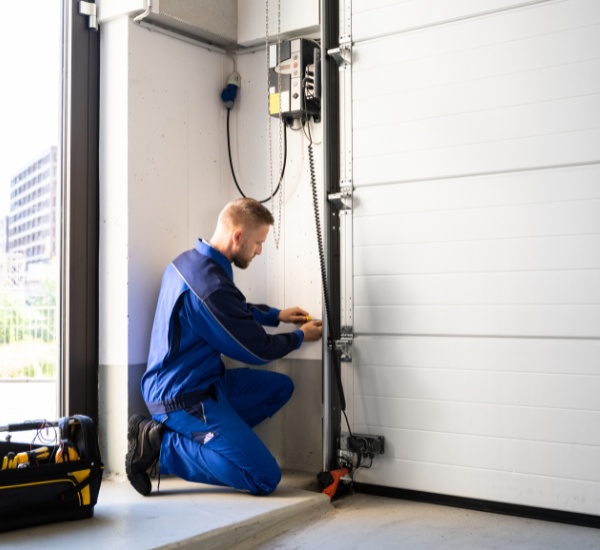
Coastal areas around Santa Monica, Venice, and Long Beach subject metal hardware to salt air and humidity. These conditions can accelerate corrosion on springs, cables, hinges, rollers, tracks, and fasteners. Regular corrosion checks, cleaning, and appropriate lubrication are especially important near the coast. A technician may recommend replacing heavily rusted components rather than simply lubricating them.
Santa Ana winds can place extra stress on garage door panels, tracks, rollers, and weather seals, especially when a door is left partially open. Wind-related damage may cause a panel to bend, a track to shift, or the door to slam against its stops. Keep the door fully closed or fully open when appropriate, and have wind damage inspected before operating it.
Replacement or structural work should follow applicable California building codes and local city permitting rules. Requirements can vary by project and jurisdiction, particularly when framing, electrical work, structural openings, or major alterations are involved. Ask the contractor whether permits or inspections apply to your planned garage door installation.
What Things Should You Ask Before Accepting Garage Door Work?
First ask what the service evaluation revealed and which component triggered the failure. Obtain an breakdown of costs that separates labor, replacement parts, service fees, taxes, and optional recommendations. This makes it easier to compare estimates and prevent confusion.
Ask whether the replacement parts are factory-original parts, suitable aftermarket parts, or upgraded components. Confirm the expected service life, manufacturer specifications, and whether the technician will replace related worn hardware. For springs, ask about the cycle rating and whether both springs should be replaced as a matched set.
Address the warranty in writing. Clarify whether it covers parts, labor, corrosion, adjustment, and return visits. A parts warranty may not cover installation workmanship, and some warranties require maintenance by a qualified provider. Also ask how soon the company can respond if the door fails again.
Finally, ask whether the quote is for repair or replacement and why. A clear explanation supports a sensible decision based on safety, reliability, appearance, and long-term cost rather than pressure.
Garage Door Repair FAQs
How much does garage door repair cost in Los Angeles?
Most routine repairs cost approximately $100 to $600, while spring, panel, cable, or opener work may reach $900 or more. The final price depends on the service call fee, labor, parts, door size, access, urgency, and neighborhood. Obtain a written estimate that clearly lists labor and parts.
How much does garage door spring replacement cost near me?
A standard spring replacement often costs about $200 to $500 in the Los Angeles area. A torsion spring and extension spring require different installation methods, and heavy or custom doors may cost more. Do not choose a provider solely by a low advertised price; check the spring rating, safety inspection, and warranty.
Is it cheaper to repair or replace a garage door?
Repair is usually cheaper when the door has limited damage and the sections, tracks, and opener are in sound condition. Replacement may be more practical when the door is old, repeatedly failing, badly corroded, structurally damaged, or fitted with discontinued parts. Weigh the repair cost with the garage door replacement cost and consider future maintenance.
EM Garage Doors And Gate Service Inc19629 Cantara St, Reseda, CA 91335
(818) 919-0785
https://emgaragedoorsandgateservice.com/
https://maps.app.goo.gl/XujLWxA4pAQKARQT8
34.2193569, -118.5613022
How long does a typical garage door repair take?
Minor adjustments, sensor repairs, and roller replacements may take about one hour. Spring, cable, panel, or opener work can take several hours, especially if parts must be located. A full replacement commonly requires more time for removal, installation, balancing, programming, and testing. Ask for a repair timeline before work commences.
How can I find a trustworthy garage door repair company in Los Angeles?
Look for a properly qualified provider with local experience, insurance, clear business information, and strong communication. Verify licensing when applicable, request a written estimate, ask about warranty coverage, and require a diagnostic explanation before approving work. Choose a company that discusses maintenance, safety, and the repair-versus-replacement decision without using aggressive sales tactics.